

Why Most Renovation Projects Go Over Budget (And How to Prevent It)
Budget overruns in renovation projects are common but preventable. Learn the real causes and how a structured contractor approach keeps your project on budget.

Budget overruns are the most common complaint in residential construction. They’re also the most preventable.
The pattern is consistent: a homeowner gets a quote, approves the project, and three weeks in, the numbers start shifting. Change orders appear. Material costs “weren’t included.” Unexpected conditions behind the walls add labor. By the time the project closes, the final invoice is 20% to 40% higher than the original estimate.
This doesn’t happen by accident. It happens because of how the project was set up — or wasn’t.
The Root Cause Is Almost Always Scope, Not Cost
When homeowners analyze a budget overrun after the fact, the instinct is to blame material price increases or unforeseen conditions. Those factors exist — but they’re rarely the primary cause.
The root cause is almost always an incomplete scope of work at the start of the project.
An incomplete scope means the original quote didn’t specify materials to a sufficient level of detail, didn’t account for permit costs, didn’t include demolition and disposal, or left labor categories vague enough that they could be billed separately later.
A contractor who quotes a kitchen remodel as a single line item — “kitchen renovation: $28,000” — has given you a number, not a scope. That number will change. A contractor who provides a detailed breakdown by category, material specification, and labor trade has given you a contract you can hold them to.
The document you sign before work begins determines what the final number will be.
Change Orders: How Small Decisions Become Large Costs
Change orders are legitimate in construction. Conditions behind walls, structural discoveries, and client-driven design changes are real variables that require contract adjustments.
The problem is when change orders are used as a revenue mechanism rather than a genuine project adjustment.
Signs that change orders are being misused:
- Items that should have been scoped initially appear as change orders mid-project
- Pricing on change orders is significantly higher than market rate
- Change orders are verbal, not written
- There is no defined process for approving changes before work proceeds
A professional contractor will document every change order in writing before executing the work, provide a clear cost and timeline impact, and require sign-off before proceeding. If a contractor begins additional work without written authorization, that’s a process failure — and a financial risk for the homeowner.

The Hidden Costs Most Estimates Leave Out
Even with a detailed contractor, there are cost categories that homeowners frequently underestimate or miss entirely.
Permits. In Orange County and Hudson Valley, permits are required for structural work, electrical, plumbing, and in many cases, kitchen and bathroom renovations. Permit fees vary by municipality and project scope. A quote that doesn’t include permit procurement and fees will require a separate budget line.
Temporary accommodations. A full kitchen or bathroom renovation may render those spaces unusable for two to four weeks. If the home has only one bathroom, that has real logistical and financial implications.
Finish upgrades. Quotes are typically based on standard-grade materials. Homeowners frequently upgrade selections once they see physical samples — tile, countertops, fixtures, flooring. Each upgrade has a cost differential that wasn’t in the original estimate.
Post-renovation work. Touch-up painting, fixture installation, hardware, and punch list items sometimes fall outside a contractor’s base scope. Confirm in writing what the final walk-through process includes and what constitutes project completion.

How to Structure Your Budget Before the Project Starts
The homeowners who finish renovation projects on budget are not lucky. They planned differently from the start.
Build in a contingency from day one. A 10% to 15% contingency on top of the contract value is standard practice for residential renovation. This isn’t pessimism — it’s realistic financial planning. If the contingency isn’t used, it stays in your account.
Get three detailed quotes, not three numbers. Comparing quotes only works when the scope is identical. Ask each contractor to quote against the same specification list. If one contractor’s quote is significantly lower, identify what they excluded before assuming it’s a better deal.
Separate your wants from your must-haves before the project starts. Upgrade decisions made mid-project are more expensive than those made during the planning phase. Define your material selections before the contract is signed.
Confirm the payment schedule is milestone-based. Payment schedules tied to project completion stages — not calendar dates — align the contractor’s financial incentive with project progress. Avoid large upfront deposits with no defined milestones.
How Set Up Care Construction Controls Project Costs
At Set Up Care Construction, every project starts with a defined scope document that itemizes materials, labor, permits, and timeline. Change orders are written, priced, and signed before any additional work proceeds.
We operate in Orange County and Hudson Valley with a process built to give homeowners financial visibility from estimate to final invoice — not surprises at the end.
If you’re planning a renovation and want to understand what a structured cost framework looks like before you commit, we’re available for a project consultation.
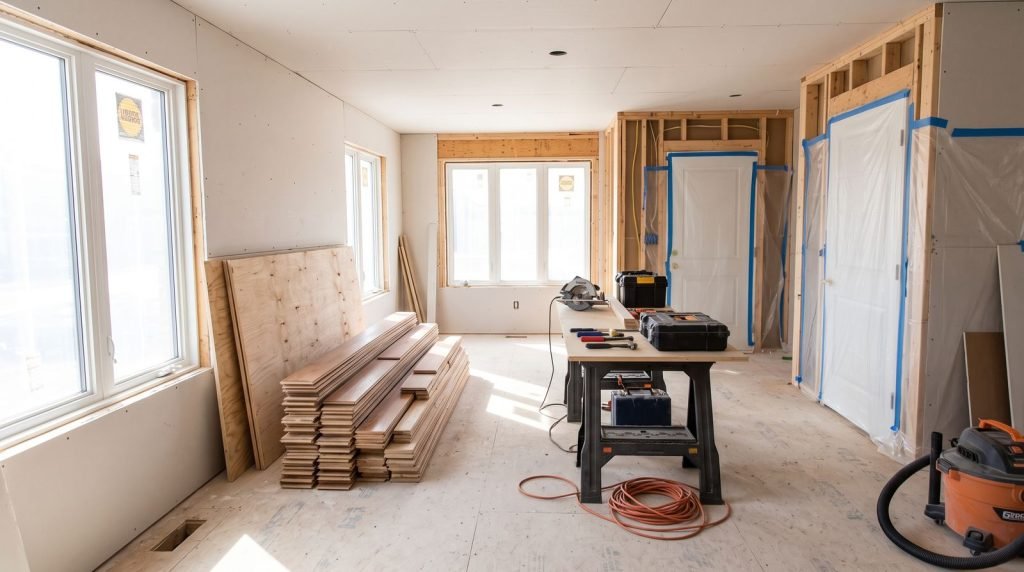
The Budget Conversation Starts Before the First Tool Is Used
Renovation projects don’t go over budget in the final weeks. They go over budget in the planning phase — when scope was left vague, contingencies weren’t built in, and the contract didn’t define what “done” actually means.
The solution isn’t a bigger budget. It’s a better process.
Work with a contractor who treats the scope document as seriously as the construction itself, and the final invoice will rarely be a surprise.
LET'S BUILD TOGETHER
Get a detailed proposal with transparent pricing and a guaranteed timeline. No obligations, no pressure.